• bucky
  • Rova / Buckminster Fuller

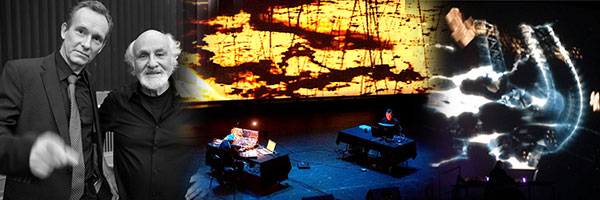
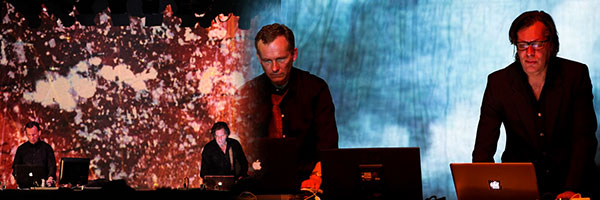
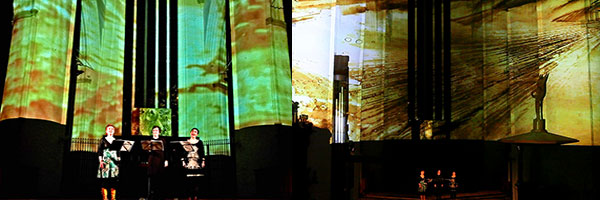
    Rova Saxophone Quartet and Lillevan will collaborate for a special performance in San Francisco in May 2009

    World Premiere: 22 May 2009
    San Francisico, USA

    Documentation video clip soon
    bucky

    Rovat 2009: Fissures, Futures

    From the press Release:

    ‘Rova Saxophone Quartet returns for another ground-breaking take-no-prisoners collaboration.’

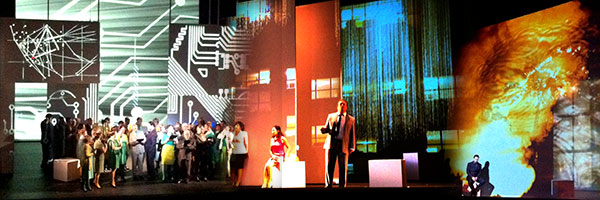
    ‘Featuring acclaimed Berlin digital-animation artist Lillevan and an international crew of music giants from the field of improvised music, the show will consist of a suite of pieces in which the musician’s sounds influence the spontaneously composed film images, and the in-time digital animation inspires the music.’

    ‘Artists include Rova, Lillevan, percussionist Kjell Nordeson plus string players Lisle Ellis, Joan Jeanrenaud and Carla Kihlstedt.’

    The piece is inspired by the thoughts and works of futurist and visionary Buckminster Fuller

    Venue: Jewish Community Center of San Francisco, 3200 California Street
    Time: 22nd May and 23rd May: 8:00pm


    RovateMyles_04 ©MylesBoisen RovateMyles_27cr ©MylesBoisen RovaLehn_57 ©ThomasLehn


    BuckminsterDome

    Here are some of Buckminster Fuller’s thoughts in his own words:

    ‘… society tends to think statically and is always being surprised, often uncomfortably, sometimes fatally by the omni-inexorable motion of Universe. Lacking dynamic apprehension, it is difficult for humanity to get out of its static fixations and to see great trends evolving.’

    ‘Most importantly we have learned that from here on it is success for all or none, for it is experimentally proven by physics that “unity is plural and at minimum two” – the complementary but not mirror-imaged proton and neutron. you and I are inherently different and complimentary. Together we average as zero – that is, as eternity’

    ‘There is no shape of the Universe. There is only omnidirectional, nonconceptual ‘out’ and the specifically directioned, conceptual ‘in.’ …The atmosphere’s molecules over any place on Earth’s surface are forever shifting position. The air over the Himalayas is enveloping California a week later. The stars now overhead are underfoot twelve hours later. The stars themselves are swiftly moving in respect to one another. Many of them have not been where you see them for millions of years; many burnt out long ago. The Sun’s light takes eight minutes to reach us. We have relationships __ but not space… ‘Synergy’ means behavior of whole systems unpredicted by the behavior of their parts taken separately…. It is dealing with the whole that makes it possible to discover the parts’.

    ‘The greatest of all the faculties is the ability of the imagination to formulate conceptually. Conceptuality is subjective; realization is objective. Conceptuality is metaphysical and weightless; reality is physical. The artist was right all the time. Nature is conceptual’.

    A little bio material taken from The Buckminster Fuller Institute R. Buckminster Fuller (1895 – 1983); inventor, architect, engineer, mathematician, poet and cosmologist was one of the most enlightened mystics of the last century. His universal vision saw our planet as ‘Spaceship Earth’. Buckminster Fuller was one of our world’s first futurists and global thinkers. His 1927 decision to work always and only for all humanity led him to address the largest global problems of poverty, disease and homelessness. He realized early on that by examining global problems in the context of the whole system—the whole planet—he would have the best chance of identifying large-scale trends that would allow him to anticipate the critical needs of humanity. He has been called ‘the first poet of technology,’ ‘the greatest living genius of industrial-technical realization in building,’ ‘an anticipator of the world to come—which is different from being a prophet,’ ‘a seminal thinker,’ and ‘an inspired child.’ But all these encomiums are fairly recent. For most of his life, R. Buckminster Fuller was known simply as a crackpot. He is also something more than the mere sum of his praise and criticism. He is a throwback to the classic American individualist, a mold which produced Thomas Edison and Thoreau—men with the fresh eye that sees and questions everything anew, and the crotchety mind that refuses to believe there is anything that cannot be done. What Fuller sees excites him with the vision of man’s potentialities, and he has made it his mission to help man realize them. Says he: ‘Man knows so much and does so little.’

  • KinoVida

    A new project by Lillevan & Sasu Ripatti; a collaged & condensed real-time film

    Announcing:
    KinoVida

    A new project by Lillevan & Sasu Ripatti

    World Premiere: Skanu Mezs Festival, Riga – May09

    Next performance: Dis-Patch Festival, Belgrade – Nov09

    Fragments from a selection of European films, are processed, collaged & condensed in real-time into a new possible film

    Kinovida is a sensual and artistic synthesis of structural and emotional aspects of film composition, a dream-like hommage to the innovations of various European film movements, a seamless tribute to historical and open-ended narratives

    Films from East and West are referenced, exploring the emotional waves and vibrant visual vocabulary of European Cinema


    Here’s a short mix of excerpts from the Riga performance, not synchronized & in no particular order, and a short sample of the real-time audio collage by Sasu Ripatti.

    Quicktime required
    Video file is quite large & may take a few moments to load
    Please let the video buffer before watching

    If you have difficulty viewing the Quicktime Clip – here’s a Flash-Clip (lower quality)


    Some more stills from the production of KinoVida:

    kinovida_pre_01
    kinovida_pre_03
    kinovida_pre_04
    kinovida_pre_02


  • kloing_17s
  • Kloing !

    Collaboration with Olga Neuwirth: a computer-controlled grand piano is the central element of ‘Kloing!’, for self-playing piano, live-video and pianist (2008)

    Here’s a short introduction to ‘Kloing !’
    Performed for the first time at Kunstfest Weimar in 2008
    Next performance: Philharmonic in Köln (Jan 2010)


    Olga Neuwirth: concept & composition
    Lillevan: live video
    Marino Formenti: piano
    Peter Plessas, Gerhard Eckel (IEM-Institut für Elektronische Musik Graz) programming & sound design

    This short 8min clip gives an impression of the composition.
    The duration of the full composition is 38min

    Format: Quicktime (plug-in required)
    Video file is quite large & may take a few moments to load
    Please let the video buffer before watching
    If you experience problems viewing the clip, there is a lower-quality version on vimeo here

     
    The traditional piano in a new light. Working on sound: how can you prevent a note from fading away? How would it have to be formed and processed for this purpose? Olga Neuwirth pits a live pianist against a ‘player piano’ that can play alone – and against him. The pianist becomes a Sisyphus and his tragicomic failure is ‘pre-programmed’
    Das traditionelle Klavier in neuem Licht. Arbeit am Klang: wie läßt sich das Verklingen eines Tons verhindern? Wie muß er für solche Zwecke bearbeitet und geformt werden? Bei Olga Neuwirth kämpft ein Live-Pianist gegen ein Disklavier, das alleine spielen kann – und gegen ihn. Der Pianist ein Sisyphos, sein tragikomisches Scheitern ist vorprogrammiert.

    kloing_17


    A Bösendorfer CEUS computer-controlled grand piano is the central element of Olga Neuwirth’s new composition “Kloing!”, for self-playing piano, pianist and video.


    The instrument plays audified data from a geodynamic pendulum at the Grotta Gigante/ University of Trieste recorded at the time of the earthquake off Sumatra in 2004. This flow of sound is distorted by quotations from classical virtuoso piano and contrasted using warped mathematical modules.


    The pianist, playing the piano at the same time, now enters into combat with the instrument, in a confrontation between man and machine. Keys already depressed by the computer’s control process can no longer be played. The two opponents try to overtake each other at a furious speed, each trying to snatch the rug from under the other’s feet.


    The romantic world of the pianist is supplanted by the keyboard.


    Commissioned by: Kunstfest Weimar and Betty Freeman.


    olganeuwirth.com
    kunstfest-weimar.de
    Institut für Elektronische Musik und Akustik

    Im Rahmen von Olga Neuwirths neuer Komposition “Kloing!” für selbstspielendes Klavier, Pianist und Video kommt als zentrales Element ein Bösendorfer CEUS Computerflügel zum Einsatz.


    Das Instrument spielt audifizierte Daten eines geodynamischen Pendels der Universität Triest zur Zeit des Sumatra-Erdbebens 2004. Dieser Klangfluss wird durch Zitate aus der klassisch-virtuosen Piano- Literatur entstellt und durch verfremdete, mathematische Module kontrastiert.


    Der gleichzeitig auf dem Klavier spielende Pianist tritt nun in einen Kampf mit dem Instrument, es kommt zur Konfrontation Mensch- Maschine. Bereits von der Computersteuerung niedergedrückte Tasten können nicht mehr angeschlagen werden, in rasender Geschwindigkeit versuchen die beiden Opponenten sich gegenseitig zu überrunden, ziehen sich gleichsam den Boden unter den Füssen weg.


    Die romantische Welt des Pianisten wird von der Klaviatur verdrängt.


    Kompositionsauftrag: Kunstfest Weimar und Betty Freeman

    kloing_16
    kloing_14
    kloing_13
    kloing_12
    kloing_11
    kloing_10
    kloing_09
    kloing_08
    kloing_07
    kloing_06
    kloing_05
    kloing_04
    kloing_03
    kloing_00

  • xenakisalive_05
  • Xenakis

    DVD and performance, Commissioned by Zeitkratzer Ensemble and Asphodel Records, film inspired by the music of Xenakis (2007)


    xenakisalive_05
    .

    Commissioned by Zeitkratzer Ensemble and Asphodel Records (San Francisco), Lillevan created moving imagery for this composition inspired by the music of Xenakis, for performance and for the DVD release on Asphodel (2007).

    Directed and created by Lillevan, the video is inspired by Xenakis’ mathematical compositional technique.

    Based on photographs and film fragments of the Iranian city of Persepolis, the source material is manipulated beyond recognition, it is the raw material for a full-length film which organically reflects the dynamic intensity of Xenakis[a]live!. The moving imagery is a twisted collage which reflects and accompanies the intense textures of the musical composition.

    It also reflects my state of mind while working on this piece: the film was composed and animated between trips to heart clinics and specialists during the summer and fall of 2005, as I was suffering from a heart muscle infection (myocarditis). Numerous experiences in Magnetic Resonance & Computed Axial Tomography scan devices proved very inspirational…

    Duration of film and music: circa 52mins

    www.zeitkratzer.de
    www.asphodel.com

    QUICKTIME COMING SOON

    XENAKISCOVER

    Excerpt of Review in Textura:

    ‘Unlike the Metal Machine Music DVD, the video presentation by Lillevan doesn’t include footage of the ensemble. Instead, the German video artist uses photographs and film fragments of the Iranian city of Persepolis as source material, though his treatments render the material unrecognizable as such. The piece begins with vertical bars of mutating colour and pattern that expand and contract in time to the music in a style not dissimilar from the video work included in Rechenzentrum’s 2003 release Director’s Cut.’

    ‘Eventually the bars blend into a rectangular display of suggestive pictorial character where horizontals move in and out of focus and the multi-layered screen elements become copper, hair-like patterns that rapidly criss-cross at various angles.’

    ‘Finely-detailed black and gold details then crowd the screen, mutating like minute organisms. In its later stages, the images come into clearer focus though never so much that they can be identified as literal, real-world elements.’

    ‘Having flirted with recognizability, the visuals return to the abstract form of the beginning. Lillevan’s piece is a spectacularly realized wedding of visuals and sound that captivates from start to finish.’

    Textura, September 2007

    QUICKTIME COMING SOON

  • dc_front 240x217
  • Rechenzentrum

    Audio-Visual Performance Group, formed in 1997, disbanded in 2008, pioneering audio-visual performance and award-winning DVD releases

    Audio-Visual Performance Group

    Started: 1997
    Finished: 2008

    Pioneering audio-visual performance and award-winning DVD releases

    This page is under construction
    Archive of work and history of Rechenzentrum here soon

    dc_front

    RZ_collage

  • With Fennesz

    Lillevan collaborates with Christian Fennesz, performing audio-visual concerts in Montreal, Berlin, Hong Kong, Vienna…

    After some very successful shows recently (Mutek08/Montreal; Shift/Basel, Transmediale/Berlin, Node/Modena) Lillevan and Christian Fennesz are teaming up to present a special show at the Ars Electronica 2009.

    Further scheduled shows here

    Booking info for Lillevan & Fennesz collaboration, please contact Shaktimusic


    Edit from ‘Saffron Revolution / Rain’
    An exclusive work for ‘Screen Compositions 5’, a New York screening event in March 2009
    More info here

    The audio track is ‘Saffron Revolution’ from the album ‘Black Sea’
    This video features footage of rain, filmed in Japan in 2005 and Switzerland in 2008
    Excerpt from live performance by Lillevan & Fennesz in Montreal and Basel in 2008
    Composited in 2009

    Quicktime required
    Video file is quite large & may take a few moments to load
    Please let the video buffer before watching
    There is a lower-quality version on vimeo here

    If you experience problems viewing the Quicktime Clip, here’s a lower quality Flash-version:


    Some pics from the performance @ Node Festival, Italy, June2009


    Pics by Alberto Macchioni & Jacopo Saffiotti


    Some pics from the Shift Festival


    Pics by Peter Schnetz
    shift2
    shift3
    shift4
    shift5

    booking info for Lillevan & Fennesz collaboration, please contact Shaktimusic
  • morton
  • Morton Subotnick / Bregenz

    Lillevan to collaborate with Morton Subotnick on a reworking of his Opera ‘Jacob’s Room’ (2010)


    Kunst aus der Zeit & Bregenzer Festspiele have invited Lillevan to collaborate on Morton Subotnick’s reworking of his Opera ‘Jacob’s Room’.

    Premiere in July 2010 in Bregenz,
    Preparation in Berlin & New York 2009/2010

    More info on this as the project develops

    mort+lillevan

    Lillevan and Morton Subotnick in Berlin; Fall 2008


    Team:
    Music: Morton Subotnick
    Director: Mirella Weingarten
    Video: Lillevan
    Dramaturgy: Laura Berman
    Arrangement + Electronics: Ari Benjamin

    www.mortonsubotnick.com
    Kunst aus der Zeit/Bregenzer Festspiele
    Morton Subotnick @ wikipedia

  • delay_works
  • With Vladislav Delay

    Past and future collaboration with Vladislav Delay/Luomo, including upcoming new project for 2009


    Collaborations with Vladislav Delay

    Lillevan and Vladislav Delay have performed many times over the last 8 years, also collaborating under Vladislav’s other monikers Luomo and Uusitalo. Performances are always free-form, allowing a maximum of possibilities as the visual side creates a new layer of expression, flowing freely with and against the music.
    A special collaboration called KinoVida has begun in 2009, please find info here


    For an example of a pre-render for the New York SCreenings of 2009, check the excerpt below

    Edit from ‘Otan Osaa / Sands & Crystals’
    An exclusive work for ‘Screen Compositions 5’ – a New York screening event at the Experimental Intermedia Foundation in March 2009

    The audio track is ‘Otan Osaa’ from the album ‘Demo(n) Tracks’
    The video includes footage of crystallization experiments in my studio in 2008, filmed through a microscope, and images of Morroccan sand photographed near Marrakesh through a telescope in the late 90ies

    Quicktime required
    Video file is quite large & may take a few moments to load
    Please let the video buffer before watching

    If you experience problems viewing the Quicktime Clip, here’s a lower quality Flash-version:


    Pics from the performance at Plateaux Festival, Poland, Nov 2008
    plateaux


    More info about Vladislav Delay

  • ea_news
  • Embedded Art

    Art in the Name of Security; commissioned by Berlin’s Akademie der Künste; 14-channel video installation (2009)

    EMBEDDED ARTART IN THE NAME OF SECURITY
    Akademie der Künste, Pariser Platz 4, Berlin-Mitte

    Commissioned by the Akademie der Künste Berlin and BBM,
    Lillevan creates an original piece for the exhibition in collaboration with media artist Zaji Chalem.

    Vernissage 23-Jan-2009 / 7pm
    Exhibition runs: 24-Jan to 22-Mar 2009 / Tue-Fri / 11am – 8pm
    Every Friday at 8pm: ‘Homeland Security Club’

    ea_berliner_zeitung2

    Berliner Zeitung 24th Jan.


    Concept

    EMBEDDED ART looks at the threats to unrestricted public life following the 9/11 attacks and the attacks in Madrid, Moscow and London.

    Security issues in the 21st century have an impact on the day-to-day life of millions of people. Since terrorism has reached major European and US cities that were once considered safe, citizens have been subject to increasing state control.

    To ensure comprehensive physical, political and national integrity, security has become a new ideology, the ‘mantra’ of civilised society.

    Konzept

    EMBEDDED ART beschäftigt sich mit den Bedrohungen eines freien öffentlichen Lebens nach den Anschlägen von 9/11, Madrid, Moskau und London.

    Fragen der Sicherheit haben den Alltag von Millionen von Menschen im 21. Jahrhundert verändert. Seit der Terror die sicher geglaubten Metropolen der USA und Europas erreichte, hat sich der staatliche Zugriff auf den Bürger ausgeweitet.

    Im Dienst einer allumfassenden Gewährleistung körperlicher, politischer und staatlicher Unversehrtheit ist Sicherheit zu einer neuen Ideologie, zum „Mantra“ der zivilen Gesellschaft geworden.

    Exhibition website here


    HACK_0095.jpg

    HACK_0107.jpg

    HACK_0144.jpg


    Artist duo Lillevan and Zaji Chalem, originally commissioned to work on a project on ‘the war room’, expanded their range of activities, complementing their ‘war room’ scenario with a ‘digital situation table’.

    In this work they drew on military history models such as the ‘Himmelbett’ aerial control zones used during World War II. The ‘Himmelbett’ was a chain of radar guidance systems for German night-fighters and was also dubbed the ‘Kammhuber Line’ after its creator and organiser, Major General Josef Kammhuber.

    This air defence line stretched along the frontier of the German Reich from Denmark to southern France, a distance of over 1,000 kilometres. The system’s central tool was a multi-level frame, like a canopied four-poster bed, (‘Himmelbett’), which is viewed from above and combines all relevant data on a defined field like a table.

    The ‘Himmelbett’ system underwent several evolutions from 1940 to 1942, which military historians have meticuously documented on the Internet.

    Lillevan’s work on the Fraunhofer Institute’s ‘Multi-display workbench for interactive scene analysis and processing’ is however historically and aesthetically closer to our time. Data collected from drones, unmanned submarines or cameras mounted on autonomen jeeps can be consolidated on the ‘digital situation table’.


    Excerpt of the Seeburg Himmelbett Video, projected from above on a horizontal table-screen
    See pics below for documentation
    ©Lillevan/Zaji Chalem 2009


    Lillevan and Zaji Chalem were also responsible for video-programming the 10-channel ‘Control Room’ installation at Embedded Art
    Software programming by Zsolt Barat

    Here are some video clips documenting the ‘Control Room’


    Here’s a collage of images from research and preparatory stages of the project
    Images copyright Embedded Art/BBM/Chalem/Lillevan

    You’ll find an archive of research-images and sketches here

    ea

  • bildwelten
  • Bildwelten des Wissens

    Audio-Visual solo-performance, commissioned by the ‘Aesthetics of Technical Imagery’ Dept of Berlin’s Humboldt University (2008)


    Under Construction
    Documentation video clip here soon

    Audio-Visual solo-performance: ‘Extended Symptoms of the World’

    Specially commissioned by the ‘Aesthetics of Technical Imagery’ Dept of Berlin’s Humboldt University, celebrating 5 years of “Bildwelten des Wissens”

    Lectures by Prof Dr Jürgen Renn, Dr Peter Geimer, Prof Dr Horst Bredekamp
    Institute website

    b

  • EXPO 01
  • EXPO 2000

    72 cinematic modules, move freely and display moving imagery. Commissioned for the World Exhibition by ZKM (2000)

    EXPO 01

    Hall 4 of the Expo2000 theme park deals with ‘Knowledge, Information, Communication’. The ZKM team Hannover, (affiliated to the ZKM, Center for Art and Mediatechnology, Karlsruhe) present an exhibition which concerns itself primarily with the development of new media and so-called ‘intelligent systems’.

    The leitmotive of the exhibition is the ‘post-biological human’, a visionary sketch of 21st century human.

    72 exhibition modules were developed; these move completely freely on a surface of 5000 square metres.

    Capsules exist in three different sizes, the largest of which is over 4.5m long; they move slowly, sliding through the exhibition space, avoiding obstacles, reacting to the presence of visitors, coordinating themselves in relation to each other, and thus forming a swarm of robots.

    This swarm behaves – similarly to flocks of birds or a schools of herrings – as a ‘superorganism’, a social group, whose qualities and characteristics can only exist as a cooperation arising from a multiplicity of individuals.

    EXPO 02

    The piece is informed by the Expanded Cinema movement, the installation functions as a gigantic real-time film editing system, the visitor is an active element in this system.

    Films are projected onto the milky surface shells of the robots.

    The visitor moves through the exhibition, and assembles a personal film, choosing from a huge supply of images and clips.

    QUICKTIME – Documentation clips and more text coming soon

    more info
    BBM Homepage
    Zkm, Karlsruhe

  • bioskop_header
  • Bioskop

    A Cinematic Installation by Lillevan, composer zeitblom and architects Christian Fuchs and Jörg Lammers (2006)


    Bioskop – A Cinematic Installation

    Documentation video clip here soon

    For the cinematic installation Bioskop the history of film, its scores and the cinema as a setting within media were explored.

    bioskop_header

    Video: Lillevan
    Architects: Christian Fuchs and Jörg Lammers
    Audio: zeitblom

    01_bioskop_dn

    Artefacts from films and scores were processed, collaged and densely knit into a meta-film. The formal basic elements of the medium film are the central issue of bioskop
    The result could therefore be called ‘an absolute film’

    The concert- and installation-situation of bioskop is equivalent to the classic ‘performance’ of silent movies being supported by jukeboxes, gramophone records or live music, it seldom was really silent

    On the opening night and finissage of bioskop, musicians Boram Lie (cello), Steve Heather (percussion), Martin Siewert (guitars) and zeitblom (elektronics, bass) played within the installation


    Review in taz Berlin 8-May-2006
    ‘Viele White Cubes in der Black Box’
    von Dietmar Kammerer

    Meta-Kino: Mit ihrer Installation “Bioskop” entdecken der Videokünstler Lillevan, der Komponist Zeitblom und die Architekten Christian Fuchs und Jörg Lammers die mögliche Zukunft des Filmeschauens als einen Ausflug in die früheste Kinogeschichte

    Im Ausstellungsraum “Kubus” des Tesla im Podewil’schen Palais hängen, gegeneinander versetzt, sechzehn weiße Quader unterschiedlicher Größen in der Mitte des Raumes. Wäre die Saalbeleuchtung an, hätte man eine hübsch rhythmisierte, minimalistische Plastik vor sich und mehr nicht. Aber es ist finster und das “Bioskop”, ein multimediales Gemeinschaftswerk des Videokünstlers Lillevan, des Komponisten Zeitblom und der Architekten Christian Fuchs und Jörg Lammers, ist weder Skulptur noch Licht noch Ton, sondern alles zusammen: eine “begehbare Installation”, Meta-Kino als Medienkunstwerk, eine mögliche Zukunft filmischer Rezeption als Ausflug in die früheste Kinogeschichte.

    Die Quader dienen als Projektionsflächen der filmischen Installation. Augenfälliger kann man das hier veranstaltete Zusammentreffen von Kunst und Kino wohl kaum arrangieren: lauter kleine White Cubes in einer umfassenden Black Box. Selbst die weißen Sitzbänke korrespondieren mit den an dünnen Drähten aufgehängten Leinwand-Elementen, die mitten im Raum zu schweben scheinen. Auch ohne Projektion geht von den Quadern eine Art überirdisches Schimmern aus. Unwillkürlich wird man an Kubricks enigmatischen Monolithen aus “2001” erinnert, eine genauere Referenz wären allerdings die Aufführungspraktiken des Expanded Cinema.

    Doch anders als sich etwa ein Maurice Lemaître dies gewünscht hätte, kommt es bei der “Bioskop”-Vernissage trotz Andrangs nicht zu Gedrängel, Konfettiwerferei oder Schüssen auf die Leinwand. Statt Tumult herrscht stille Ergriffenheit, als Zeitblom und drei Mitmusiker die Filmkomposition live aufführen. Offenbar sind doch noch nicht alle Grenzsteine zwischen den Künsten abgeschliffen. Konzert, das heißt immer noch: Sitzen und Zuhören.

    Vor und nach der Live-Performance, die Soundbegleitung kommt dann von Band, herrscht die Situation “Kunst”, das heißt: Alle dürfen Herumlaufen, sich zu den Bildern in wechselnde Beziehungen setzen. Denn wer sitzen bleibt, verpasst das Eigentliche. Niemals hat man alles im Blick, umherlaufend muss jeder Besucher seine eigenen Multiperspektiven zusammensetzen, eine Collage aus einer Collage von Bildern. Manche trauen sich, nicht nur drumherum, sondern auch mittendurch zu gehen, durch die Spalten zwischen den Leinwänden zu schlüpfen. Schlank muss man sein dafür und darf keine Berührungsangst vor Kunst haben.

    Vom gleichnamigen Projektionsapparat der Kinopioniere Skladanowsky ist das Tesla-“Bioskop” weit entfernt: keine knatternde Mechanik und flackernde Vorführung, sondern kleinteilig am Computer gesampelte Filmfragmente aus über 130 Filmen werden parallel projiziert. Zu Beginn glühen auf der Leinwand zwei Projektorenlampen in so hellem Weiß auf, dass man beinahe reflexhaft versucht, seine Augen davor zu schützen. Dann folgt Ruhe, pulsierende Lichtpunkte wie Reflexionen auf einer Wasseroberfläche.

    In der ersten Hälfte dominiert Dunkelheit, nur hier und dort erscheinen amorphe Lichtflecken wie unscharfe Nachbilder auf der Netzhaut. Allmählich taucht Figuratives auf: Außenaufnahmen von Gebäuden, Treppen, eine Hand am Türgriff, ein Stillleben mit Blumenvase, die Silhouette eines Berges am Horizont. Nichts davon bleibt lange, es sind tastende Erkundungen ins Repertoire filmsprachlicher Konventionen, eher gefühlte als gewusste Eindrücke von Gestalten.

    Die Filmfragmente werden als Rohmaterial und nicht als Zitat verwendet, es gibt keine Filmgeschichte zu bewundern, sondern eine liebevolle Neugier auf die Wirkungen von Helligkeit, Dunkel und Chemie: Selbst sinnfreies Vorlaufmaterial oder völlig zersetztes Filmmaterial darf hier seine Schönheit entfalten. Wer möchte, kann gleich mehrere Entwicklungsgeschichten erkennen: eine etwa der Filmfarben, von den schwarzweißen Anfängen, über die Mühen der manuell viragierten Frames bis zu einem ausgeblichenen Technicolor. Oder gleich einen kosmischen Schöpfungsmythos: Feuer, Wasser, Himmel und Erde, den Weg vom Dunkel ins Licht der reinen Helligkeit. Und dann gibt es noch Effekte, die ihre Zufälligkeit gegen jede lineare Logik behaupten: Streulicht, Widerschein der Projektionen auf Oberflächen im Raum, eine diffuse Luminosität auf den Rückseiten der Leinwände.

    In diesen Momenten wird das “Bioskop” wirklich zu einer “lebendigen Schau”. Für Lillevan ist jedenfalls auch nach der Eröffnung die Arbeit am Werk nicht zu Ende – er sieht die Installation als ein work in progress, das noch manche Entwicklungen durchlaufen wird. Zur Abschlusspräsentation am Samstag, 13. Mai, um 23 Uhr, werden Zeitblom und Orchester noch einmal live auftreten. DIETMAR KAMMERER

    Taz Berlin vom 8.5.2006, S. 23, 159 Z, DIETMAR KAMMERER
    Wir danken Dietmar Kammerer und die taz für die Genehmigung diesen Artikel abzudrucken

  • emp12
  • Emperor Remixed

    Reworking of Beethoven’s 5th Piano Concert; a special project by Lillevan, Marc Weiser and Ueli Wiget of Ensemble Modern (2005-2008)


    emp_header

    An experimental re-working of Beethoven’s 5th piano concerto

    The ‘Emperor Remixed’ project presents the fifth piano concerto by Ludwig von Beethoven (‘Emperor’, Opus 73), a classic of German musical history, in a remixed version which combines classical piano, electronic music and film.

    This musical revision of Beethoven’s 5th piano concerto is based on the original score, transmitted entirely in the form of midi files. The interaction of classical instruments with computer-generated sounds generates an autonomous body of sound, which feeds off the dialog between the different musical worlds to take on a life of its own.

    Pianist Ueli Wiget (Ensemble Modern) plays the pianoforte part of the original as written in the score, representing the tonality both of the piece and of the solo instrument. Renowned German electronic and multi-media artists Rechenzentrum (1997-2008) re-assembled the orchestra part, using techniques taken from contemporary electronic music and film.

    A dynamic filmic composition accompanies the musical sequences, creating a “visual piano concerto”, which is searching, through its analysis of the music and visualisation of audio signals, for the very essence of the performance situation.

    The composition was commissioned by the Goethe Institute as part of the “Germany in Japan” cultural program 2005/2006.

    Performances of ‘Emperor Remixed’:
    Seoul (KR), Beijing (CH), Kyoto & Tokyo (JP) – 2006
    Berlin, Frankfurt & Heidelberg (DE) – 2007
    Copenhagen, (DK) – 2008

    emp_flyer
    emp5
    emp6
    emp12
    emp11

  • screentests
  • Lillevan's Warhol Krakow/New York

    Experimental re-working of Andy Warhol’s Screentest Series, created and presented at Unsound Festival. Krakow, Poland (2008)


    Under construction
    Documentation video clips coming soon

    Krakow’s Unsound Festival and Lillevan present a reconfigured version of Andy Warhol’s ‘Screen Tests’.

    Influenced by Warhol’s intentions, and updated through contemporary film-making techniques, a series of Krakow screentests were created and presented during the Unsound Festival.

    Commissioned by Goethe Institute Krakow & New York.
    To be repeated in New York, Nov 2009

    screentests

    krakow_studio

    Krakow Studio where Lillevan & Jolanta Opiola filmed most of the Krakow Screentests

    krakow_mat

    Projection at the Unsound Festival

    Unsound Festival website here
    Info about the original Warhol screen tests here

  • J.S. Bach in Russia

    Performances with Russian electro-acoustic composer Olga Shajdullina in Moscow and Niznij Novogorod (2008)

    The Russian electro-acoustic group Sirens & Goethe Institut invite Lillevan to Moscow and Niznij Novogorod to perform interpretations of music by JS Bach at the Bach festival & the Long Arms Festival.

    Lillevan performs solo and with the Nizhny Novgorod Soloists String Quartet.

    October 2008.
    Performance dates here

    Video documentation clips coming soon

    bach

    The SIRENS combine electronical and live sound to produce compositions based on different noises of the river Volga basins. The river Volga basins – like hypostases on a body – become symptoms of the desease: flooding of villages and cities, still water, destruction of fish and accumulation of nuclear waste in the silt…

    Electronic and string tracks were composed individually. Such specialized ways of making each track are to emphasize sound atmosphere of each basin. Strings, as well as electronical tracks, use the musical range which is similar to the sound of water basins.

    In the mysterious and chaotic sounding created by an indifferent computer it is possible to feel fragments of the Volga tunes, steamship sirens, boatswains’ pipes and peals pressed up to few notes…

    Video program is based on the optical effects originating from illumination of water surface, which is influenced by live music.

    Sound-Art – Evgenie Strelkov
    electronics – Anton Tcherkasov (The Rat hole)
    strings – Olga Shajdullina
    quartet “Soloists of Nizhni Novgorod”
    director – Vladimir Plaksin

    1 violin – Dmitry Stoyanov
    2 violin – Vladimir Plaksin
    Alt – Victor Ljubimov
    Cello – Natalia Telminova

    sirens
    sirens